

Essential facts, history, visitor draws, and story-worthy insights.
Located in central North Carolina, Winston-Salem offers a distinctive mix of history, creativity, and Southern charm. Founded as two separate towns — Winston and Salem — the hyphenated city has evolved into a modern hub for innovation and the arts. Here’s a quick primer before you visit.

Headline
Frequently Asked Questions
Situated in North Carolina’s Piedmont region, Winston-Salem sits at the geographic sweet spot between the Blue Ridge Mountains and the Atlantic Coast. A drive to the mountains takes just one hour west, while the coast is a straightforward four-hour drive east.
With roughly 260,000 residents, Winston-Salem is North Carolina’s fifth-largest city. It serves as the urban anchor for a thriving metropolitan area of more than 715,000 people.
The city experiences a true four-season climate, averaging 217 sunny days per year. Winters are generally mild, summers are long and warm, spring brings an explosion of historic blooms, and peak fall foliage typically blankets the region by late October.
Whether traveling by car or air, connectivity is seamless:
- By Highway: Winston-Salem connects directly to major interstate corridors—including I-40, I-74, US-52, and nearby I-77 and I-85. This network places the city within a 90-minute drive of both Charlotte and Raleigh.
- By Air: Piedmont Triad International Airport (GSO) is a convenient 25-minute drive from downtown, offering direct flights to major U.S. hubs. Two larger international gateways—Charlotte Douglas International (CLT) and Raleigh-Durham International (RDU)—are both reachable within 90 minutes.
Winston-Salem’s story begins with the Moravians, a German-speaking Protestant group from Central Europe. Fleeing religious persecution, these skilled craftsmen, farmers, and musicians settled briefly in Pennsylvania before traveling 500 miles south along the Great Wagon Road to North Carolina.
In 1753 they founded Bethabara, the first Moravian settlement in the South. Thirteen years later, they established Salem as their permanent congregation town, which quickly became a colonial hub for trade, craftsmanship, and music. The Winston-Salem region remains the primary Southern center of the global Moravian Church today. Learn more about Moravian history here.
Right next door. Winston was established as the Forsyth County seat in 1849 and grew up fast as an industrial powerhouse — home to corporate tobacco and banking empires that put the city on the global map.
In 1913, after decades of operating side-by-side just a mile apart, two cities became one. The merger briefly made Winston-Salem the largest city in North Carolina — ahead of Charlotte. It also makes Winston-Salem one of only five legally hyphenated cities in the U.S., and the only one in the top 100 most populous. That hyphen — "the Dash" — became the name of the local minor league baseball team.
Winston-Salem is the birthplace of several homegrown brands you know (and might be wearing now):
- Krispy Kreme was founded in Old Salem Museums & Gardens in 1937, where customers famously lined up to buy hot doughnuts fresh off the production line. A historic marker still marks the original site, while the company’s flagship store—where the iconic “Hot Now” sign was created—remains on Stratford Road.
- Texas Pete was created here in 1929 by T.W. Garner Food Company and remains one of America’s top-selling hot sauces. Despite the name, it has never been produced in Texas.
- Hanes Brands was also founded here, with local textile mills producing a significant share of America’s socks and underwear—helping earn Winston-Salem the nickname “The Underwear Capital of America.” The company remains headquartered here today.
- R.J. Reynolds founded his tobacco company here in 1875; his Camel cigarettes gave Winston-Salem its enduring nickname, "Camel City". Reynolds American remains headquartered here today as part of British American Tobacco.
Healthcare and technology have replaced manufacturing as the city's main engines. Atrium Health Wake Forest Baptist and Novant Health together employ more than 35,000 people locally and anchor a significant clinical research ecosystem across the Southeast.
Much of this research is done in the Innovation Quarter (iQ). The 330-acre downtown district — built inside former tobacco factories and warehouses — has become one of the nation’s fastest-growing research parks. It's home to the globally renowned Wake Forest Institute for Regenerative Medicine (WFIRM), which made history as the world’s first organization to successfully engineer lab-grown organs and implant them in human patients.
Winston-Salem is home to 30,000 students across six distinct higher education institutions, detailed fully in our College Campus Guide.
A few of the standouts include:
- Wake Forest University: A nationally ranked academic powerhouse and longtime ACC athletics staple.
- Winston-Salem State University: A top-tier Historically Black University (HBCU) nationally celebrated for its premier healthcare and nursing programs.
- UNC School of the Arts: The nation’s first public arts conservatory, known globally for producing Oscar, Emmy, and Tony Award-winning talent.
- Salem College: Established in 1772, it is the oldest educational institution for women in America, now operating as a private women's college nestled right within the historic district.
Quite a bit! For starters, Winston-Salem was one of just 23 destinations worldwide selected for a Good Housekeeping 2026 Travel Award. Some other recent highlights include
- #2 Best City for Business Costs — WalletHub
- #4 Best U.S. City to Raise a Family — StorageCafe / MSN
- #7 Best U.S. City for Retirees — U.S. News & World Report
- Top 5% of Livability’s Top 100 Best Places to Live in America
- Top 5 Romantic Destinations in the Carolinas — AOL
See what other writers, creators, and media outlets are saying on our Media Mentions page.
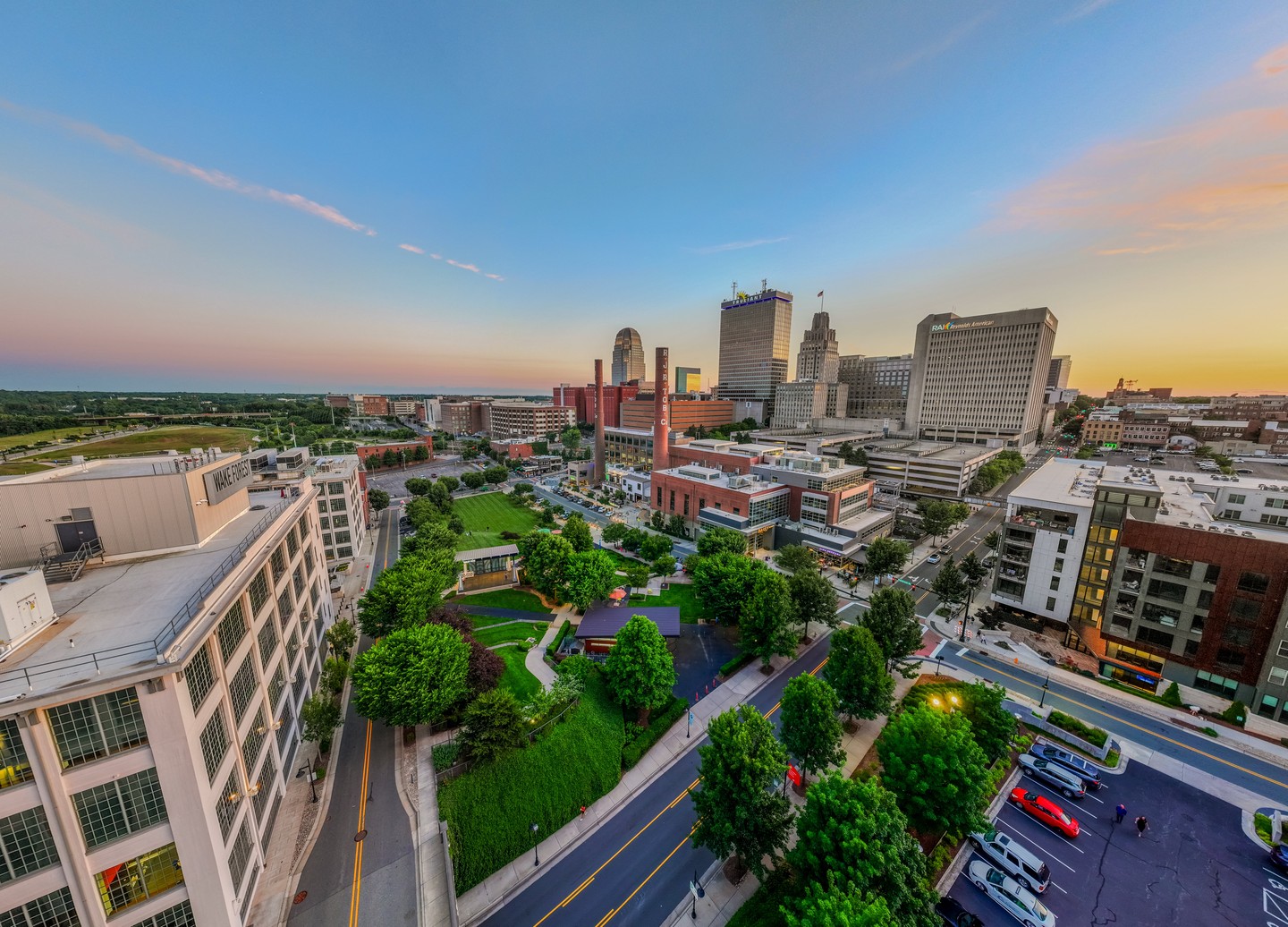
A great starting point is the city’s walkable downtown, which has had over $1.5 billion in investment in recent years and earned a "best downtown" nod from Forbes. It boasts 100+ restaurants, 80+ shops and galleries, and 30+ bars, breweries, and nightlife spots, along with parks, greenways, museums, and public art. Aside from downtown, there are two anchors worth working into any first-time visit:
- Old Salem Museums & Gardens is a nearly 100-acre living-history district where costumed interpreters demonstrate early Moravian craftsmanship along cobblestone streets. Don't skip Winkler Bakery, the oldest continuously operating bakery in the country, where you can pick up famous treats such as Moravian cookies and sugarcake. Learn more here: Old Salem 101
- Reynolda is the 170-acre country estate of R.J. Reynolds and his wife Katharine, built in 1917. The historic mansion is now a premier American art museum. The surrounding formal gardens are open to the public, and the estate's original white-stucco farm buildings have been converted into Reynolda Village — a cluster of shops and restaurants worth an afternoon.